Choosing a garage door opener comes down to five things: how heavy your door is, how much noise you can live with, which safety and security features you want, whether you want to control it from your phone, and what happens when the power goes out. Get those right and the brand matters less than you’d think.
Short on time? Match the horsepower to your door’s weight (bigger for insulated, wood or double doors), pick a belt drive if there’s a bedroom over the garage, insist on rolling-code remotes and battery backup, and add Wi-Fi control if you ever wonder whether you left the door open. For prices, see our garage door opener cost guide.
Get quotes for a new garage door opener
Enter your ZIP code to compare opener prices from local installers. It takes about two minutes.
Free, with no obligation to hire.
Start with these five questions
-
- How heavy is your door? Insulated, wood, oversized and double doors need a stronger opener than a light single steel door.
-
- Is there living space above or beside the garage? If so, noise matters more than almost anything else.
-
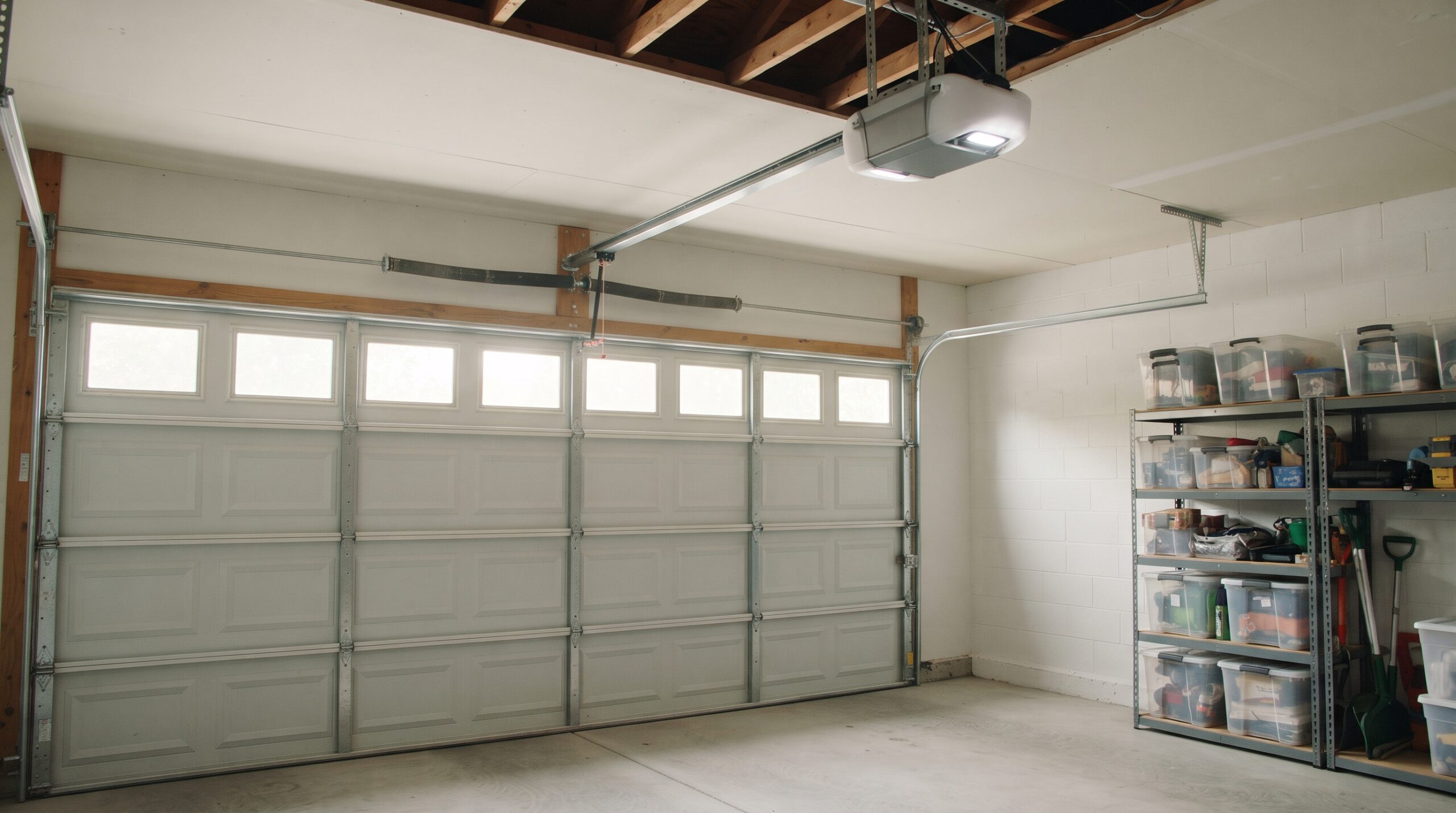
- How much ceiling room do you have? Most openers hang from the ceiling on a rail. Low ceilings, high-lift tracks or a cathedral ceiling can point you to a wall-mount opener instead.
-
- Do you want phone control? Built-in Wi-Fi, or an add-on kit later, lets you open, close and check the door from anywhere.
-
- Do power cuts happen where you live? Battery backup keeps the opener working through an outage. In California it’s required by law on new openers.
Drive types in one minute
The drive is what moves the door along the rail. All four types lift the door safely when they’re sized right; the differences are noise, price and where they fit.
| Drive type | Noise | Best for | Watch out for |
|---|---|---|---|
| Chain drive | Loudest | Detached garages, heavy doors, tight budgets | Rattle carries into rooms above |
| Belt drive | Quietest of the rail types | Attached garages, bedrooms above | Belts can slip in hot, humid garages |
| Screw drive | Moderate | Heavy doors where upkeep is low | Not recommended where seasonal temperatures swing a lot |
| Wall-mount (jackshaft) | Very quiet | Low or high ceilings, clutter-free garages | Costs more; doesn’t suit every door setup |
If you’re torn between the two most common types, our belt drive vs chain drive comparison walks through it in detail.
Horsepower: match the opener to your door
Horsepower is lifting power, and the heavier the door, the more you need. As a rule of thumb from cost guides like Angi, most single-car garages need a 1/2 HP opener, and a two-car garage needs 3/4 HP to 1 1/4 HP.
| Your door | Typical opener |
|---|---|
| Single steel door, not insulated | 1/2 HP |
| Double steel door, or any insulated door | 3/4 HP |
| Oversized, solid wood or carriage-style door | 1 HP or more |
Two things trip people up here:
-
- Planning to insulate? An insulated door weighs more. If you might upgrade the door in the next few years, buy the opener for the heavier door now.
-
- The opener isn’t meant to do the lifting. The springs carry the door’s weight; the opener guides it. A door with weak or broken springs will strain any opener, however powerful. If your door feels heavy when you lift it by hand with the opener released, get the springs checked first (see our broken spring guide).
Many newer openers with DC motors list a rating such as “HPc” or “HPS” instead of plain horsepower. Treat it as the manufacturer’s equivalent and compare models within the same brand.
AC or DC motor?
Older and budget openers use AC motors. Many newer models use DC motors, and that’s usually the better buy. DC motors make it easier to offer soft start and soft stop, where the motor ramps up and slows down gently instead of jerking the door. That makes the opener quieter and is easier on the door. Genie, for example, says its newer chain drive models use a DC motor with soft start and stop and are much quieter as a result.
DC motors are also what make battery backup practical, since the motor can run straight from a battery when the power’s out.
Safety features every opener must have
These aren’t extras. Federal rules based on the UL 325 safety standard require them on openers sold in the US, so any new opener from a reputable brand will have them.
-
- Photo-eye sensors near the floor that stop and reverse the door if something breaks the beam. Current rules require the opener to check that the sensors are connected and working, so it won’t close the door with the remote if they’re missing or faulty.
-
- Automatic reversal if the closing door hits something.
-
- A manual release (the red cord) so you can disconnect the door from the opener.
The Consumer Product Safety Commission recommends testing your opener every month. Lay a roll of paper towels or a 2×4 flat under the door and close it; the door should reverse when it touches it. Then wave something through the sensor beam as the door closes; it should stop and go back up.
If your current opener is so old it has no sensors at the bottom of the tracks, replace it. Openers made before the 1993 rules don’t meet today’s safety standard.
Security features worth insisting on
-
- Rolling-code remotes. Every press sends a new code, so nobody can record your signal and replay it. Genie calls its version Intellicode; other brands have their own names. If your remote has a row of tiny switches inside, it’s an old fixed-code model and it’s time to upgrade.
-
- A lock or vacation mode on the wall control that blocks every remote while you’re away.
-
- A keypad with a code you can change, so you can give access without handing out remotes.
Our garage security guide covers the rest of the garage, from side doors to the emergency release.
Smart features: worth it?
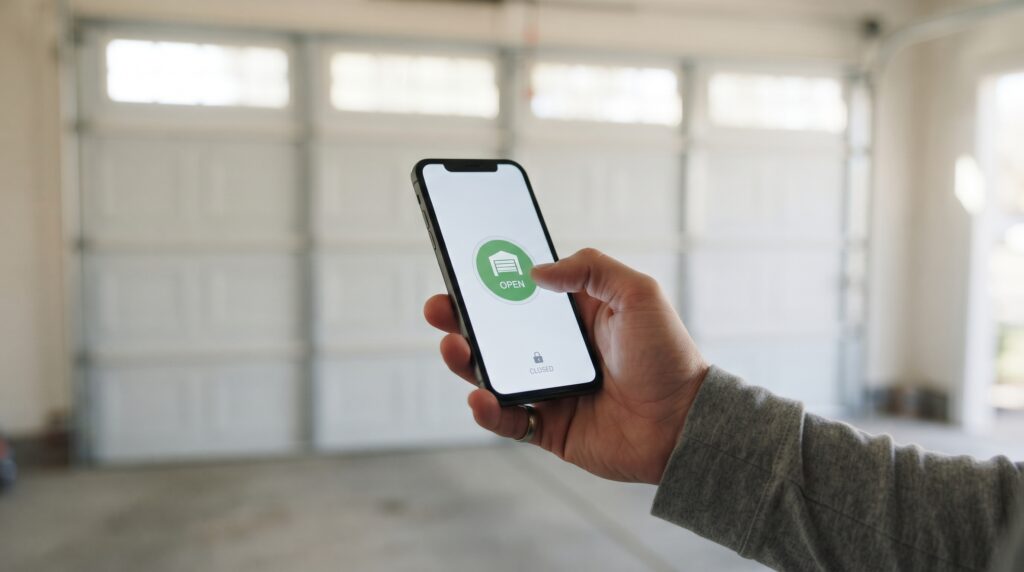
For most people, yes. Wi-Fi openers let you open and close the door from your phone, get an alert when it opens, and check whether you left it open after you’ve driven away. The big brands each have their own app: Chamberlain and LiftMaster use myQ, and Genie uses Aladdin Connect.
Useful smart features to look for:
-
- Open and close alerts and a door-status check from anywhere
-
- Guest access, so a dog walker or family member can get in without a remote (Genie calls these Virtual Keys)
-
- Timer-to-close rules that close the door if it’s been left open
-
- Voice assistant support if you already use one at home
Already have an opener you like? You don’t need to replace it to get phone control. Both Genie and Chamberlain sell add-on smart kits that work with many existing openers, including some other brands.
Battery backup
A battery backup runs the opener through a power cut, so you’re not wrestling the door open by hand in the dark. It’s worth having anywhere that gets storms, and in California it isn’t optional: since July 1, 2019, new and replacement openers sold or installed there must have a battery backup (SB 969).
If yours doesn’t have one, make sure everyone in the house knows how to open the garage door when the power is out.
Other features that make daily life easier
-
- Built-in LED lighting. Brighter and longer-lasting than old bulbs. If you add your own LED bulbs to an older opener, use ones labeled as compatible with garage door openers, as some can interfere with the remote.
-
- Wireless wall controls and keypads, which save running wires.
-
- Integrated cameras on some premium models, so you can see who’s at the garage.
-
- Compatibility with your car’s built-in opener buttons. Check before you buy if you use them.
Brands: compare features, not logos
The big names in US home garage door openers include Chamberlain, LiftMaster, Genie and Craftsman. All make reliable openers at a range of prices. Rather than picking a logo, compare the things that matter: horsepower or equivalent rating, drive type, motor type, warranty on the motor and the belt or chain, battery backup, and which smart app it uses. If you already own remotes, keypads or a smart kit, sticking with the same brand can save you replacing them.
DIY or professional installation?
Installing an opener is a manageable job for an experienced DIYer with a helper and the manufacturer’s instructions. A pro will usually do it in a few hours, haul the old unit away, and set the travel limits and force correctly. Either way, the springs must be balanced before the new opener goes on. Spring adjustment is never a DIY job: if the door doesn’t stay put when lifted halfway by hand, call a technician.
New openers installed typically run $215 to $800, with premium wall-mount models passing $900. Our garage door opener cost guide breaks down prices by type.
Your opener buying checklist
-
- Horsepower (or equivalent) matched to your door, with room to spare if you plan to insulate
-
- Belt drive or wall-mount if there’s living space above or beside the garage
-
- DC motor with soft start and stop
-
- Rolling-code remotes and a lock mode on the wall control
-
- Battery backup (required in California)
-
- Wi-Fi and app control, or a plan to add a smart kit later
-
- A warranty that covers the motor for several years
-
- Springs checked and balanced before installation
Get quotes from local pros
Tell us what you need and we’ll connect you with pre-screened local garage door pros. It’s free, and there’s no obligation.
Compare garage door opener quotes
Enter your ZIP code to get prices from local opener installers. It takes about two minutes.
Free, with no obligation to hire.
Frequently asked questions
How long does a garage door opener last?
Usually 10 to 15 years with basic care. If yours is older than that, is noisy, or lacks safety sensors, replacement is worth pricing.
What horsepower opener do I need for a two-car garage?
Usually 3/4 HP to 1 1/4 HP, depending on the door’s weight. Insulated and wood doors sit at the higher end.
Can I make my old opener smart without replacing it?
Often, yes. Add-on Wi-Fi kits from the major brands work with many existing openers. Check the kit’s compatibility list first.
Is a belt drive or chain drive better?
Belt drives are quieter; chain drives cost less and handle heat well. If there’s a bedroom above the garage, go with belt. Our belt vs chain comparison has the details.
Do I need battery backup?
It’s required on new openers in California, and it’s worth having anywhere that gets power cuts or storms.