Your garage door is the biggest moving thing in your house, and most homeowners never touch it until it breaks. Fifteen minutes twice a year, ideally in spring and before the first freeze in fall, catches most problems early, keeps the door quiet and helps the springs and opener last longer.
Here’s the routine, with a shopping list, the extra jobs for each season, and the mistakes that cause more harm than good.
What you’ll need
| Item | Why | Tip |
|---|---|---|
| Garage door lubricant | Hinges, roller bearings, springs | Silicone or white lithium spray sold for garage doors. A straw nozzle helps you aim it |
| Clean rags | Wiping tracks and drips | Old cotton T-shirts are ideal |
| Socket set or nut driver | Tightening hinge and bracket bolts | A 7/16-inch socket fits most residential door hardware |
| Stepladder | Reaching the top rollers and springs | Set it to the side of the spring, never directly beneath it |
| Roll of paper towels or a 2×4 | Testing the auto-reverse | Lay it flat in the door’s path |
| Small torpedo level | Re-aligning the safety sensors if needed | Optional, but handy |
| Replacement bottom seal | Only if yours is cracked or flattened | Take a photo of the retainer (the metal channel on the door’s bottom edge) to match the seal shape |
The checklist
- Look and listen (2 minutes). Run the door up and down and watch it. Does it move smoothly and evenly? Any grinding, scraping or jerking? Look at the springs, cables, rollers and tracks for rust, fraying or anything bent.
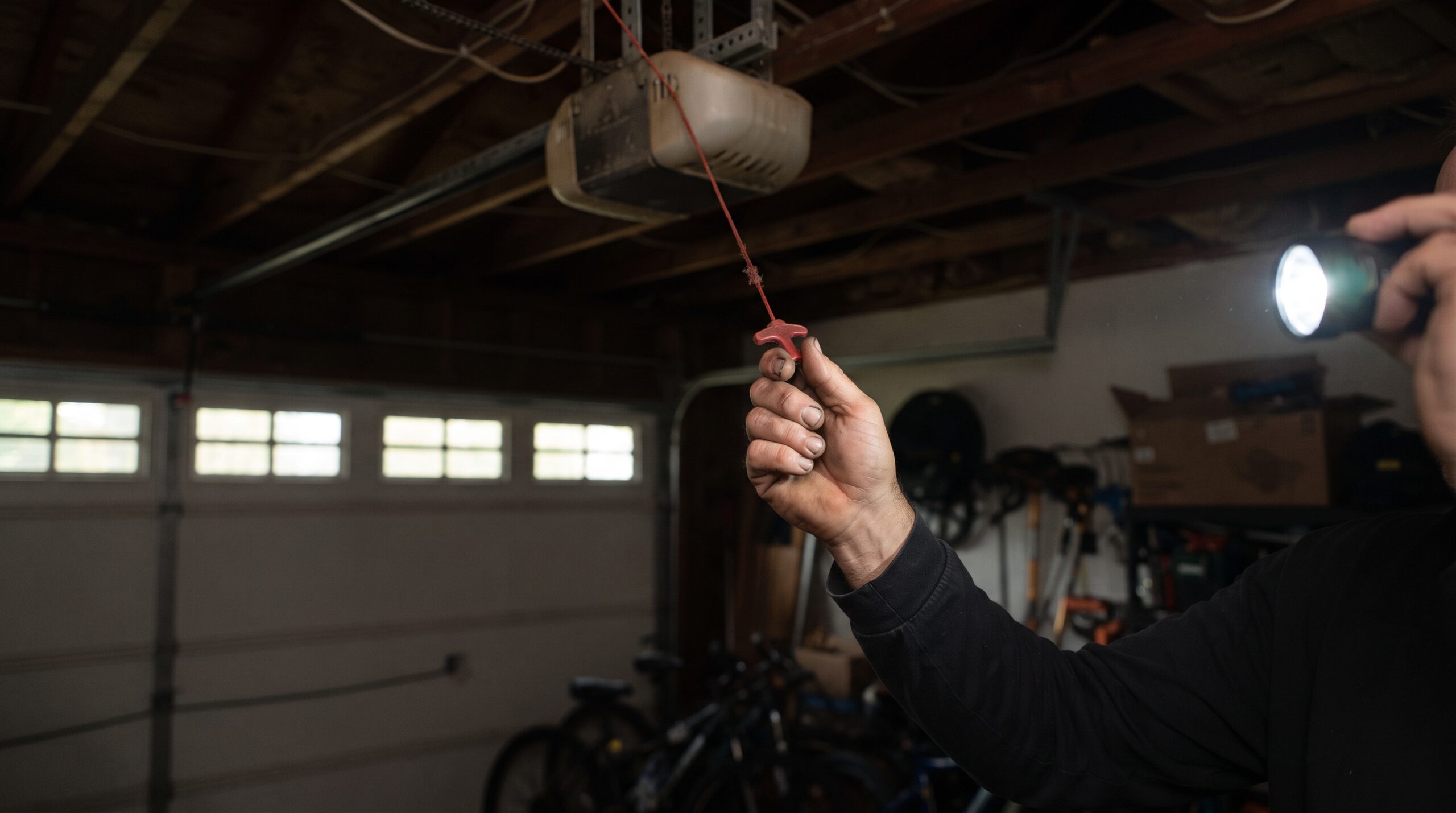
- Test the balance (2 minutes). Close the door, pull the red emergency release, and lift the door by hand to about halfway. Let go carefully. A balanced door stays put, or drifts only slightly. If it slams down or shoots up, the springs need adjusting by a technician.
- Test the auto-reverse (1 minute). Reconnect the opener. Lay a roll of paper towels or a 2×4 flat in the door’s path and close the door. It should reverse as soon as it touches the object. If it doesn’t, stop using the opener until it’s fixed. The CPSC recommends doing this test every month.
- Test the photo-eye sensors (1 minute). Start closing the door and wave an object (not your foot) through the beam near the floor. The door should stop and reverse. See garage door won’t close if it doesn’t.
- Clean the tracks (2 minutes). Unplug the opener. Wipe out the inside of both tracks with a dry rag. Don’t grease the tracks.
- Lubricate (4 minutes). A short spray on each hinge pivot, the roller bearings (not the nylon wheels), and a light coat along the torsion spring coils, sprayed from the side. Wipe off drips. Our noisy garage door guide has the details.
- Tighten loose hardware (2 minutes). Snug the nuts and bolts on hinges and track brackets. Firm, not overtightened.
- Check the weatherstripping (1 minute). Look at the rubber seal along the bottom of the door and around the frame. Cracked or flattened seal lets in water, drafts and pests, and is a cheap DIY replacement.
Plug the opener back in, run the door a couple of times, and you’re done.
Seasonal extras
Fall, before the first freeze:
- Lubricate everything. Cold thickens old grease and makes a dry door groan.
- Check the bottom seal is soft and whole. A cracked seal lets in cold air and can freeze to the concrete.
- Test the balance. Springs are most likely to snap on the first very cold mornings, and a door that’s already out of balance is under extra strain.
- If you have a battery backup opener, check the battery holds a charge before storm season.
Winter:
- Keep snow and ice away from the safety sensors and the threshold.
- If the door freezes to the floor, free it gently with a plastic scraper or warm (not boiling) water. Never force it with the opener.
Spring:
- Wipe pollen, dust and cobwebs from the tracks and sensor lenses.
- Look for winter damage: rust spots on the bottom panel, salt marks, a torn seal.
Summer:
- In very hot climates, check the weatherstripping for cracking from the sun.
- If you live near the coast, rinse salt spray off the door and hardware a few times a year and lubricate more often.
Your monthly two-minute check
Between the twice-yearly routines, take two minutes once a month to:
- Test the auto-reverse with a roll of paper towels or a 2×4 in the door’s path. The CPSC recommends doing this monthly.
- Wave something through the sensor beam as the door closes, to check it stops and reverses.
- Glance at the cables and springs for fraying, gaps or rust.
Common mistakes to avoid
- Greasing the tracks. Grease collects dirt and makes rollers skid. Keep tracks clean and dry.
- Using the original WD-40 as a lubricant. It’s a cleaner and water displacer. Use it to clean if you like, then apply a proper garage door lubricant.
- Spraying the nylon roller wheels. Lubricate the bearing in the center, not the wheel itself.
- Overtightening bolts. It can strip the holes in the door panels. Snug is enough.
- Turning up the opener’s force to make a sticky door close. It hides the real problem and can stop the auto-reverse working properly.
- Adjusting springs or cables yourself. Those parts are under enough tension to cause serious injury.
Leave these to a pro
Some parts are under enough tension to cause serious injury. Don’t adjust, loosen or remove:
- Springs of any kind
- Cables, or the bottom brackets where the cables attach (often painted red as a warning)
- The drums at the top of the door where the cables wind
If your checks turn up a problem with any of these, book a technician. A professional tune-up usually costs $100 to $250 and includes a balance adjustment, lubrication, hardware check and a full safety test.
Signs you need a technician now
- A gap in a spring, or you heard a loud bang (broken spring)
- A frayed or loose cable, or the door hanging crooked (door off track)
- The door fails the balance or auto-reverse test
- The opener hums but the door won’t move (opener hums)
Make it a habit
Set a reminder for the weekend the clocks change in spring and fall. It’s the same weekend you’d test smoke alarms, and a garage door that’s checked twice a year rarely surprises you on a freezing morning.
Need a garage door technician?
Enter your ZIP code to get matched with trusted local garage door pros. It takes about two minutes.
Free, with no obligation to hire.
Frequently asked questions
How often should garage doors be serviced?
Check it yourself twice a year, and have a professional tune-up every one to two years, or yearly for heavy use.
What lubricant should I use on a garage door?
A silicone or white lithium spray made for garage doors.
How do I know if my garage door is balanced?
With the opener disconnected, lift the door halfway and let go. A balanced door stays put.
Can I adjust garage door springs myself?
No. Spring adjustment should be left to a trained technician.
Do I need to maintain a new garage door?
Yes. New doors need the same twice-yearly routine, and many manufacturers’ warranties expect basic maintenance. Check your warranty paperwork.
How long do garage door rollers last?
Basic steel rollers often wear out in 5 to 10 years with daily use. Sealed nylon rollers are quieter and usually last longer. See our noisy garage door guide for how to tell when they’re worn.